Crafting can be an enjoyable way to spend time with a loved one living with dementia. The project does not need to be complicated or completed perfectly to be meaningful.
The best crafts for dementia sufferers are usually those that fit the person’s interests, current abilities, comfort, and energy level. Someone who has always enjoyed painting may still appreciate putting color on paper. A person who loves family photographs might prefer making a collage or memory book. Someone drawn to textures may enjoy working with fabric or yarn.
The goal is not to test memory or produce a perfect finished project. It is to make creativity accessible and enjoyable.
What Makes a Craft Dementia-Friendly?
A dementia-friendly craft should be easy to adapt.
That might mean preparing materials in advance, offering fewer choices, using larger or easier-to-handle tools, or breaking a project into smaller steps.
Guidance on adapting activities for people living with Alzheimer’s emphasizes matching activities to what the person can do, helping them get started when needed, watching for frustration, and allowing them simply to observe if that is what they enjoy.
When choosing a craft, consider:
- Is the project connected to something the person enjoys?
- Can difficult steps be simplified or prepared in advance?
- Are the materials comfortable and safe for the person to handle?
- Can the project be completed without requiring precise recall or complicated instructions?
- Can the person participate without being corrected if the result looks different than expected?
Focus on the process, not perfection.
Choose, Prepare, Create, Adjust
A simple four-step approach can make crafting easier for both the person living with dementia and the family member or caregiver helping them.
Choose
Start with interests and abilities rather than selecting a project simply because it is labeled a “dementia craft.”
Think about familiar hobbies, favorite colors, family traditions, past occupations, holidays, nature, pets, or other subjects the person has enjoyed.
Prepare
Reduce unnecessary complexity before the project begins.
Pre-cut shapes when appropriate, arrange materials within easy reach, limit the number of choices, and remove tools the person does not need.
Create
Demonstrate a step when necessary and give one simple direction at a time.
Allow plenty of time. There is no need to rush or continually correct how the project is being made.
Adjust
Watch the person’s response.
If the project becomes confusing or frustrating, simplify the next step, provide assistance, take a break, or stop. Activities can be modified as a person’s abilities change, and enjoyment is more important than finishing exactly as planned.
Simple Craft Ideas for Dementia Sufferers
You do not need elaborate supplies to create an engaging project. Many easy crafts can be made with familiar materials already available at home.
Photo and Magazine Collages
Collages offer plenty of flexibility.
Gather photographs, magazine pictures, postcards, or other images that might interest the person. Depending on their abilities, they can choose pictures, arrange them, help apply glue, or simply participate in deciding where items should go.
Possible themes include:
- Family
- Flowers and gardens
- Favorite foods
- Animals
- Travel
- Holidays
- A favorite season
Family photographs can also be used, but avoid turning the activity into a test of who or what the person remembers.
Painting and Sponge Art
Painting does not require detailed drawing skills.
Large sheets of paper, broad brushes, or sponges can make the activity easier to approach. The person might paint freely, create simple shapes, decorate a card, or add color to a prepared design.
Keep instructions simple and allow the person to choose colors when they are comfortable doing so.
The finished picture does not have to resemble anything in particular. Creative expression can be the activity itself.
Memory Books and Family Photo Projects
A small scrapbook or photo book can combine crafting with familiar people, places, and experiences.
A person might help choose photographs, arrange pictures, add decorative paper, select stickers, or dictate a short caption for someone else to write.
Treat the photographs as opportunities for connection rather than asking the person to correctly identify everyone or recall specific events.
Yarn and Textile Crafts
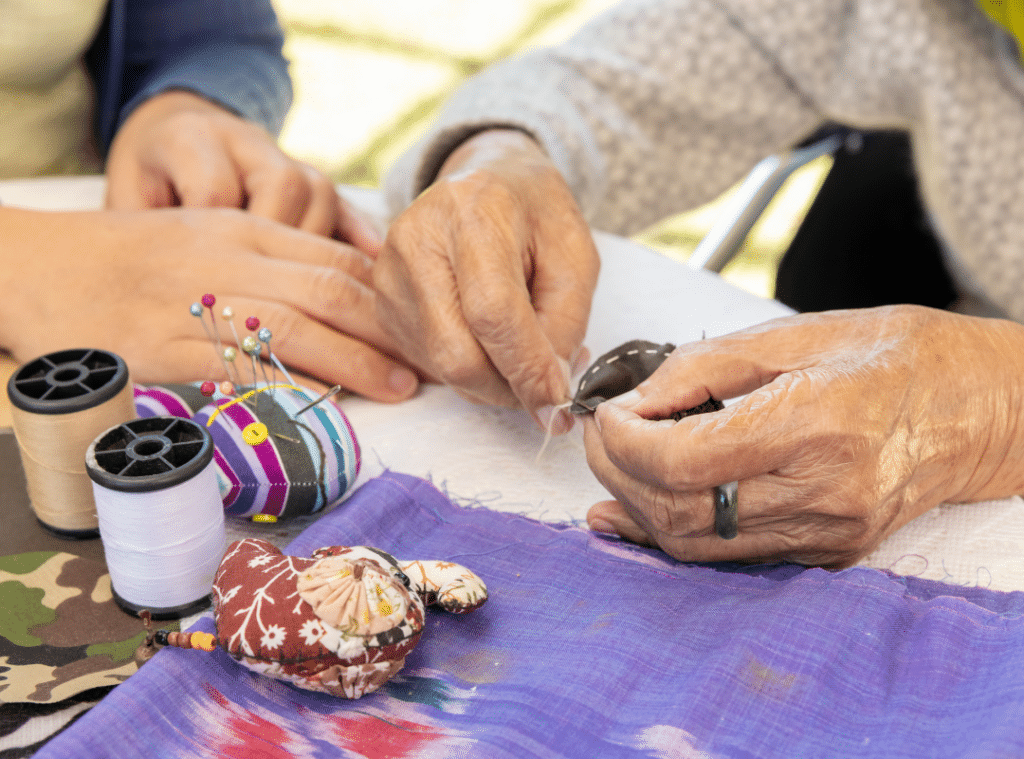
Yarn and fabric provide different textures and can be incorporated into simple projects without requiring complicated knitting or sewing.
Ideas include:
- Wrapping yarn around a large cardboard shape
- Making a fabric collage
- Decorating a picture frame with yarn
- Arranging fabric pieces by color or texture
- Creating a simple textile wall hanging
Projects involving knots, detailed patterns, needles, or many small components may need to be simplified depending on the person’s abilities.
Sensory Craft Ideas
Some crafts emphasize texture and hands-on exploration rather than detailed instructions.
Options can include:
- Textured fabric collages
- Sponge painting
- Yarn-wrapped cardboard shapes
- Nature-inspired collages
- Projects using different safe paper or fabric textures
Let the person’s response guide the project. A texture, scent, or material one person enjoys may be unpleasant or distracting to someone else.
Avoid assuming that a particular sensory craft will automatically be calming.
Seasonal Crafts Using Familiar Themes
Seasonal projects can draw on familiar colors, traditions, and times of year without requiring someone to remember specific details.
Simple ideas include:
- Spring flower collages
- Fall leaf rubbings
- Holiday cards
- Paper chains
- Painted pumpkins
- Winter snowflake art
- Valentine’s Day cards
- Simple ornaments
A familiar holiday or season may naturally lead to conversation, but the craft should remain enjoyable even when it does not prompt a particular memory.
Group or Individual Crafts: Which Works Better?
There is no single right setting for crafting.
Some people enjoy creating alongside others. A group can work on a shared mural, make cards, decorate individual pieces for a larger display, or simply work on separate projects at the same table.
Others may prefer a quiet one-on-one activity with fewer distractions and more individualized assistance.
Consider the person’s preferences and response. If a group setting becomes distracting or overwhelming, the same project may work better individually.
How to Make Crafts Easier
A project that seems simple can still involve many decisions and steps. Small changes can make participation easier.
Try these approaches:
- Prepare materials first. Have everything ready before beginning.
- Pre-cut difficult pieces. Let the person focus on arranging, decorating, or assembling.
- Limit choices. Offer two or three materials instead of an entire box.
- Use manageable tools. Larger brushes, easy-grip items, and larger pieces may be easier to handle.
- Demonstrate a step. Showing can sometimes be easier to follow than giving several verbal directions.
- Give one instruction at a time. Wait before introducing the next step.
- Help without taking over. Complete the difficult portion while leaving manageable parts for the person.
- Allow extra time. A project does not have to be completed quickly—or in one sitting.
- Accept a different result. Avoid unnecessary correction.
- Stop when necessary. Frustration or fatigue is a reason to simplify, pause, or try something else.
These principles align with broader guidance for adapting activities as dementia progresses, including focusing on enjoyment, breaking tasks into manageable steps, assisting with difficult portions, and changing an activity when it is no longer working.
Craft Safety and Material Selection
Safety should be considered according to the person’s individual abilities and level of supervision.
For many projects, it may be helpful to prepare materials beforehand rather than asking the person to use sharp or complicated tools.
Consider whether the project involves:
- Scissors or other sharp tools
- Hot glue guns or heated materials
- Toxic paints, glues, or other substances
- Small pieces that could create a swallowing risk
- Materials that may cause an allergic reaction or sensitivity
- Tools that require more coordination than is comfortable
- Materials likely to spill or create a slipping hazard
Use safe, appropriate materials and provide supervision when needed. If you are uncertain whether a material or tool is appropriate for your loved one’s abilities, choose a simpler alternative.
Free Download: 20 Dementia-Friendly Craft Activities for Seniors
Want more projects to try?
Our free guide includes 20 Dementia-Friendly Craft Activities for Seniors, with sensory, seasonal, group, and individual ideas that can be adapted for different abilities and comfort levels.
Use the ideas as starting points rather than rigid instructions. A project can always be shortened, simplified, or adapted to the person.
Looking for More Than Crafts?
Crafts are only one way to create opportunities for engagement and connection.
Families looking for music, storytelling, simple games, familiar everyday tasks, movement, outdoor ideas, and other options can explore our guide to more meaningful activities for Memory Care.
Keeping these resources separate makes it easier to choose what you need: this guide focuses specifically on crafts, while the broader activities guide covers other ways to participate and connect.
Considering Memory Care at Arcadia Senior Living Louisville
Sometimes a search for activities or crafts is part of a larger question about how to support a loved one living with dementia.
When your family is ready to learn about residential support, explore Memory Care at Arcadia Senior Living Louisville.
Arcadia Senior Living Louisville is located at 903 Blankenbaker Pkwy, Louisville, KY 40243 and offers Memory Care along with Assisted Living, Independent Living, and Respite Care.
If you are still considering what type of support may be appropriate, begin with our Care Assessment. Families who are ready to see the community can also schedule a personalized tour.
Keep the Project Simple and Personal
The most useful craft is not necessarily the most elaborate one.
A collage made from favorite photographs, a few strokes of paint, a yarn-wrapped shape, or a handmade holiday card can be enough.
Choose something that fits the person. Prepare the project so it is manageable. Offer help without demanding a particular result. Adjust when the activity is no longer enjoyable.
The goal is not a perfect craft. It is an opportunity to create together.
For ideas beyond crafting, explore more meaningful activities for Memory Care. If your family’s questions are shifting toward residential support, learn more about Memory Care at Arcadia Senior Living Louisville or start with the Care Assessment.
Frequently Asked Questions
Can People With Dementia Do Crafts?
Yes. Many people living with dementia can participate in crafts when the project matches their interests and current abilities.
Participation can take different forms. One person might complete most of a collage independently, while another may choose pictures as someone else handles cutting and gluing. Someone else may simply enjoy watching or handling materials.
The project should adapt to the person.
What Are Some Easy Crafts for Someone With Dementia?
Simple options include photo collages, sponge painting, decorating cards, yarn wrapping, fabric collages, seasonal paper projects, and simple family photo books.
Rather than choosing solely by diagnosis, consider what the person enjoys and what they can comfortably do.
How Can I Simplify a Craft for Someone With Dementia?
Prepare materials in advance, reduce the number of choices, pre-cut difficult pieces, demonstrate one step at a time, and assist with frustrating parts.
You can also shorten the activity or spread it across multiple sessions.
Finishing the entire project is not required.
What Craft Materials Should I Avoid or Supervise Closely?
This depends on the individual, but sharp tools, hot equipment, toxic substances, and very small pieces may require additional supervision or may be better replaced with safer alternatives.
Consider the person’s vision, coordination, judgment, physical abilities, and how they currently handle objects before selecting materials.