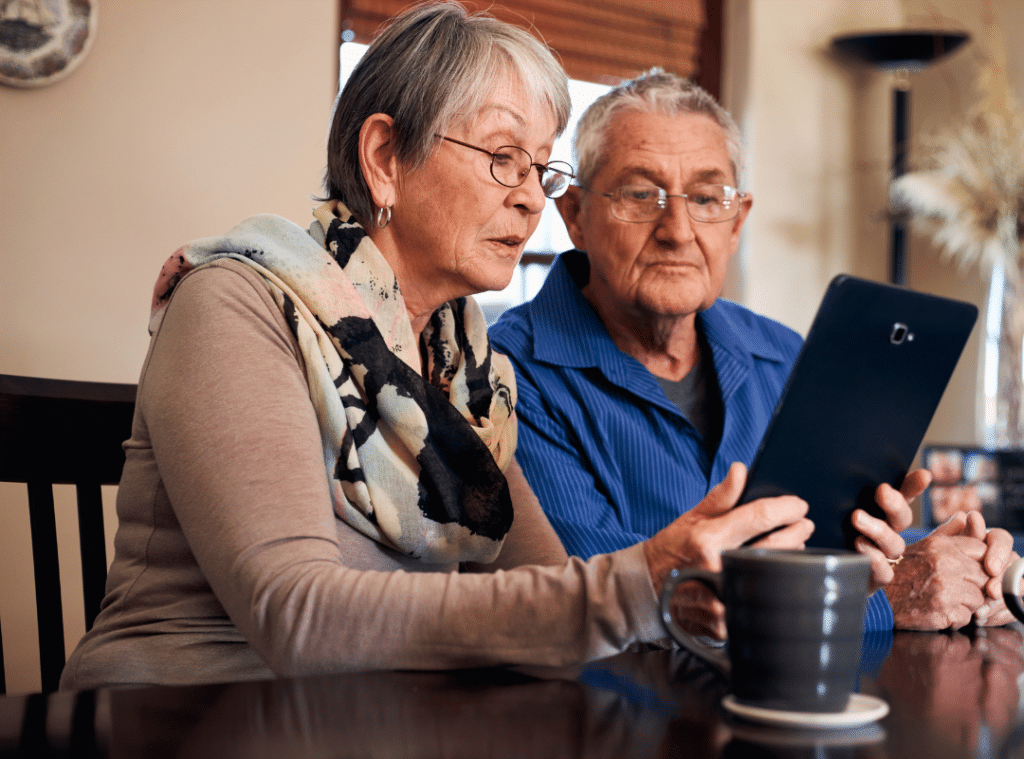
Cognitive games for seniors offer enjoyable ways to build memory, attention, reasoning, and problem-solving skills. From familiar crossword puzzles to interactive brain games, these activities can help older adults stay mentally engaged while creating opportunities for conversation and connection.
Whether you’re searching for free cognitive games for seniors, printable brain exercises, or group activities to enjoy with family and friends, there are options for different interests and abilities.
The key is choosing activities that feel engaging, not overwhelming. A simple matching game may be more enjoyable than a complicated puzzle, while someone who loves strategy might prefer chess or Sudoku.
Below are 15 cognitive games for seniors, with instructions, accessibility tips, and at-home exercises you can try. You’ll also learn what research says about brain health and how to adapt activities for older adults living with dementia.
What Are Cognitive Games for Seniors?
Cognitive games engage skills like memory, attention, language, concentration, and reasoning.
They can involve remembering information, solving puzzles, recognizing patterns, or making decisions. Some are designed for independent play, while others encourage teamwork and social interaction.
Common types of cognitive exercises for seniors include:
- Memory games: Picture matching, word recall, and storytelling.
- Word games: Crosswords, Scrabble, word searches, and word association.
- Logic puzzles: Sudoku, number sequences, and reasoning challenges.
- Attention games: Spot-the-difference puzzles and visual searches.
- Strategy games: Chess, bridge, and dominoes.
- Group brain games: Trivia, category naming, and collaborative puzzles.
- Digital games: Online memory, word, and logic activities.
The best choice depends on personal interests, abilities, and comfort level.
Although brain games offer opportunities to practice thinking skills, they don’t guarantee improved memory or prevent dementia.
Benefits of Cognitive Games for Seniors
Cognitive games can provide enjoyable mental challenges and opportunities for social engagement. Their value often extends beyond completing a puzzle or getting the correct answer.
Memory and Mental Engagement
Memory games invite players to recall familiar words, recognize pictures, and remember details.
Matching cards, storytelling, and word recall exercises are examples of activities that involve remembering information.
These games offer opportunities to practice recall, although improvement during a game does not necessarily mean lasting improvements in everyday memory.
Focus and Problem-Solving
Activities such as Sudoku, chess, and jigsaw puzzles encourage players to concentrate, recognize patterns, and consider possible solutions.
For example, assembling a jigsaw puzzle involves comparing shapes and colors, while chess requires planning several moves.
Adjusting the difficulty helps keep the experience enjoyable without creating unnecessary frustration.
Social and Emotional Wellness
Group brain games for seniors encourage conversation, participation, and shared experiences.
Trivia, card games, dominoes, and word association can bring family members or friends together.
Cooperative play also lets participants with different abilities contribute without the pressure of competition.
15 Best Cognitive Games for Seniors
These brain games for seniors include individual puzzles, group activities, printable challenges, and digital options. You can adjust each activity to suit different skill levels.
1. Crossword Puzzles
Best for: Word recall, vocabulary, and general knowledge.
Crosswords challenge players to recognize clues and fit words into a grid.
How to play: Choose a crossword with an appropriate difficulty level. Read each clue and fill in the corresponding word. Use hints when needed.
Large-print puzzles help older adults who prefer easier-to-read materials. Completing a crossword together can also turn it into a social activity.
2. Sudoku
Best for: Logical reasoning, concentration, and pattern recognition.
Sudoku involves placing numbers in a grid according to specific rules.
How to play: In a standard 9-by-9 puzzle, fill each row, column, and 3-by-3 box with the numbers 1 through 9 without repeating a number.
Beginners can start with smaller 4-by-4 puzzles or easier grids that already contain more numbers.
3. Memory Matching Cards
Best for: Visual memory and attention.
Matching cards are among the easiest memory games for seniors to prepare at home.
How to play: Place pairs of picture cards face down. Turn over two cards at a time and try to find matching pictures.
Begin with four to six pairs. Add more cards if the player enjoys a greater challenge.
Use pictures of familiar objects, flowers, or favorite hobbies to make the activity more personal.
4. Word Association Games
Best for: Language, flexible thinking, and conversation.
Word association requires no special equipment and works well for individuals or groups.
How to play: One person says a word, such as “garden.” The next person responds with a related word, such as “flowers.”
Continue taking turns, using each answer to inspire the next word.
Avoid strict time limits so everyone can participate comfortably.
5. Spot-the-Difference Puzzles
Best for: Visual attention and observation.
These puzzles show two similar pictures containing small differences.
How to play: Place the pictures side by side and compare them carefully. Identify changes in objects, colors, or details.
Start with pictures containing three differences before moving to more challenging versions.
Choose large images with clear contrast when needed.
6. Number Sequence Challenges
Best for: Pattern recognition and reasoning.
Number sequences encourage players to identify relationships between numbers.
How to play: Present a sequence with one missing number:
2, 4, 6, 8, ___
The answer is 10, because each number increases by two.
For a greater challenge, introduce sequences involving subtraction or alternating patterns.
7. Category Recall
Best for: Word retrieval, memory, and group participation.
Category recall is a simple activity you can play almost anywhere.
How to play: Choose a familiar category, such as animals, vegetables, flowers, or cities. Invite participants to name examples.
For a group activity, take turns contributing answers.
Offer hints when needed, and don’t treat the game as a timed memory test.
8. Jigsaw Puzzles
Best for: Visual reasoning, spatial awareness, and patience.
Jigsaw puzzles involve identifying shapes, colors, and patterns to assemble an image.
How to play: Spread the pieces on a table, sort them by color or edge type, and begin connecting matching sections.
Choose puzzles with larger pieces or fewer pieces when appropriate.
Working together on a puzzle can encourage conversation and a shared sense of accomplishment.
9. Chess
Best for: Planning, strategy, and decision-making.
Chess encourages players to think ahead and consider possible outcomes.
How to play: Two players take turns moving pieces according to the rules, aiming to checkmate the opponent’s king.
Beginners can practice moving individual pieces before attempting a complete game.
Other board and card games, including Scrabble, bridge, and dominoes, also provide opportunities for strategy, recall, and social interaction.
10. Story Recall Games
Best for: Listening, attention, and remembering details.
Story recall combines conversation with a simple memory challenge.
How to play: Read a short story aloud, then ask a few questions about what happened.
For example:
- Where did the story take place?
- What was the person’s favorite food?
- What happened first?
Keep the story short, allow hints, and focus on participation rather than perfect answers.
11. Music and Song Recognition
Best for: Listening, familiarity, and social connection.
Music-based games can be particularly enjoyable when songs reflect personal interests and experiences.
How to play: Play a short excerpt of a familiar song and invite participants to identify its title or artist.
You can also ask what memories or experiences the music brings to mind.
Choose songs based on individual preferences rather than assumptions about age.
12. Visual Search Games
Best for: Selective attention and visual scanning.
Visual search games involve finding a particular symbol or object among other items.
How to play: Create a page containing circles, squares, and triangles. Ask the player to circle all the triangles.
For easier play, use fewer shapes and stronger contrast.
Gradually increase the difficulty for an extra challenge.
13. Digital Brain Games
Best for: Interactive puzzles, attention, and problem-solving.
Online cognitive games for seniors provide convenient access to word puzzles, matching activities, Sudoku, and logic challenges.
How to play: Choose a game with clear instructions, readable text, and simple controls. Begin at an easy level and adjust the difficulty as needed.
Platforms such as AARP Games offer online puzzles and recreational games.
Commercial brain-training platforms, including Lumosity, may provide additional exercises, although access conditions and paid features vary.
Digital games can be enjoyable, but they are not proven methods for preventing dementia.
14. Speed-of-Processing Activities
Best for: Visual identification and attention.
Speed-of-processing activities involve recognizing information among other visual details.
How to play: Display several large symbols and ask the player to identify a particular shape.
For example, show a row containing circles, squares, and triangles, then ask the participant to locate the squares.
Adjust the number of symbols and the pace according to individual comfort.
These informal exercises are recreational activities, not substitutes for specialized cognitive-training interventions used in clinical research.
15. Creative Problem-Solving Games
Best for: Reasoning, imagination, and collaboration.
Creative challenges encourage players to think through familiar situations.
How to play: Present a simple scenario:
“You are planning a picnic for four people. What five things would you bring?”
Invite participants to explain their choices and compare ideas.
Other examples include planning an imaginary trip, creating a menu, or solving a simple riddle.
These games work well for both individuals and small groups.
Free Cognitive Games for Seniors: Online and Printable Options
Free brain games let older adults explore different activities without buying specialized equipment or committing to a subscription.
Free Online Brain Games
Common online options include crosswords, Sudoku, word searches, matching games, and digital jigsaw puzzles.
When choosing an activity, look for:
- Readable text and high-contrast visuals.
- Simple navigation and clear instructions.
- Adjustable difficulty.
- Minimal time pressure.
- Clear information about free and paid features.
Some websites offer free games alongside advertisements or subscription options. Check the access requirements before choosing a platform.
Printable Brain Games for Seniors
Printable cognitive exercises are convenient for older adults who prefer paper activities or have limited access to technology.
Popular choices include word searches, missing-number puzzles, picture matching, logic challenges, and category naming.
Use a large, readable font and leave enough space for writing answers.
Five Printable Cognitive Exercises With Answers
These exercises can be copied onto a worksheet or printed directly from this page.
Exercise 1: Number Pattern
Complete the sequence:
5, 10, 15, 20, ___
Exercise 2: Word Category
Name five vegetables.
Exercise 3: Memory Challenge
Read these words:
Apple, Chair, River, Clock, Flower
Cover the list and try to remember as many words as possible.
Exercise 4: Word Scramble
Unscramble these letters:
R A I C H
Hint: Something you sit on.
Exercise 5: Reasoning
Which item is different?
Apple, Banana, Carrot, Orange
Answers
- Any five vegetables.
- Apple, Chair, River, Clock, Flower.
- Chair.
- Carrot, because it is commonly considered a vegetable in cooking, while the other items are fruits.
You can adapt these activities by reducing the number of items, providing hints, or allowing more time.
Families looking for cognitive exercises for seniors in PDF format can also copy these examples into a document and save or print them as a worksheet.
What Research Says About Cognitive Games and Brain Health
Research into cognitive training has produced encouraging findings, but it is important to distinguish structured research interventions from ordinary recreational games.
What New Cognitive Training Research Found in 2026
In February 2026, the National Institutes of Health reported long-term findings from the ACTIVE cognitive-training study.
Researchers examined outcomes among older adults who had participated in structured training programs.
Participants assigned to a specific speed-of-processing intervention that included booster sessions had a reported 25% lower rate of Alzheimer’s disease and related dementia diagnoses compared with the relevant control group over approximately 20 years of follow-up.
The findings were based on a particular intervention and diagnoses identified through Medicare claims. They do not establish that ordinary puzzles, recreational games, or commercial brain-training apps prevent dementia.
The NIH research announcement explains the study’s findings and their limitations.
Are Digital Brain Games Better Than Traditional Puzzles?
There is not enough evidence to conclude that commercial digital brain games are universally better than traditional puzzles for long-term cognitive health.
The National Institute on Aging advises caution when interpreting claims about commercial brain-training applications because findings from specialized research programs cannot automatically be applied to consumer games.
For everyday recreation, both digital and traditional games can offer enjoyable opportunities for mental engagement.
The best option matches the person’s interests, abilities, and preferences.
Cognitive Games for Seniors With Dementia
Cognitive games for seniors with dementia should emphasize enjoyment, familiarity, and meaningful participation rather than difficulty or competitive performance.
Activities may need to change as a person’s abilities and preferences change.
Choose Familiar Activities
Matching familiar pictures, simple puzzles, bingo, music recognition, and storytelling can provide opportunities for engagement.
For example, someone who previously enjoyed gardening might prefer sorting flower pictures or identifying familiar plants.
Someone who loves music may enjoy recognizing favorite songs or sharing memories tied to them.
Avoid Unnecessary Pressure
Strict time limits, complicated instructions, and competitive scoring may cause frustration.
Offer simple choices, allow breaks, and provide hints when needed.
The goal is to create a comfortable experience rather than measure performance.
Adapt Games to Individual Abilities
Use larger cards, fewer puzzle pieces, shorter instructions, and familiar materials.
Consider vision, hearing, mobility, and concentration.
If an activity causes distress, stop or switch to something more comfortable.
These games are not treatments for dementia, but they may provide enjoyable moments and opportunities for connection.
Families considering additional support can find information about Arcadia Senior Living Louisville’s specialized Memory Care option.
How to Choose Cognitive Games for Different Abilities
The best cognitive activities for seniors are those that feel interesting, accessible, and appropriately challenging.
Consider these options based on personal preferences:
|
Interest or Preference |
Suggested Games |
|
Words and reading |
Crosswords, word searches, Scrabble |
|
Numbers and patterns |
Sudoku, number sequences |
|
Familiar pictures |
Matching cards, jigsaw puzzles |
|
Conversation and storytelling |
Trivia, category recall, story games |
|
Playing with friends |
Dominoes, bridge, word association |
|
Digital activities |
Online crosswords, matching games |
|
Simple, low-pressure activities |
Music recognition, sorting, easy puzzles |
Accessibility also matters. Large-print materials, high-contrast images, clear audio, and comfortable controls can make games easier to enjoy.
For older adults who prefer simpler recreational activities, the Easy Games for Older Adults article explores additional ways to enjoy games without complex rules.
Families and activity coordinators planning shared recreation can also explore Games for the Elderly in Care Homes for ideas centered on group participation.
Why Consistency and Social Engagement Matter
No established number of minutes of recreational brain games guarantees improved cognition or prevents dementia.
Instead of following a strict schedule, choose activities that fit naturally into everyday life.
Someone might enjoy a crossword over breakfast, work on a jigsaw puzzle in the afternoon, or play a word game with family in the evening.
Regular opportunities for conversation and shared activities can make participation more enjoyable.
Cognitive engagement is also only one part of healthy aging. Physical activity, adequate sleep, social relationships, and appropriate medical care remain important.
The goal is to make mental engagement an enjoyable part of daily life, not another source of pressure.
Explore Senior Living at Arcadia Senior Living Louisville
Staying socially connected and enjoying meaningful activities can be important considerations when exploring senior living options.
Located at 903 Blankenbaker Pkwy, Louisville, KY 40243, Arcadia Senior Living Louisville is a luxury senior living community offering Independent Living, Assisted Living, Memory Care, and Respite Care.
The community features amenities including a library, lounge, bistro, fitness center, walking path, salon and barber, and restaurant-style meals.
For older adults who want to maintain an independent lifestyle while enjoying community amenities, Independent Living at Arcadia offers an option to explore.
Families considering different levels of assistance can also learn about the community’s Assisted Living and Respite Care services.
Discover a Senior Living Community That Fits Your Needs
Cognitive games for seniors can be enjoyed at home, with family, or alongside friends. When exploring senior living, also consider the opportunities a community offers for connection, recreation, and everyday engagement.
At Arcadia Senior Living Louisville, families can learn more about living options, amenities, and personalized support.
Schedule a Tour to explore the community in person and ask questions about daily life.
You can also contact the Arcadia team to discuss services and availability, or use the Cost Comparison resource to help evaluate your senior living options.
Frequently Asked Questions
What Are Cognitive Games for Seniors?
Cognitive games for seniors are activities involving memory, attention, reasoning, language, or problem-solving. Examples include crosswords, Sudoku, matching cards, trivia, and puzzles. They can be enjoyed individually or with others. The best choices are engaging and suited to the person’s abilities.
What Are the Best Cognitive Games for Seniors?
Popular options include crossword puzzles, Sudoku, chess, memory matching, jigsaw puzzles, and word association. Some older adults prefer online activities, while others enjoy traditional board games or printable exercises. The right choice depends on personal interests and comfort level.
Are There Free Cognitive Games for Seniors Online?
Yes. Free online options include crosswords, word searches, Sudoku, and digital puzzles. Some platforms offer free activities alongside paid features. Check access requirements before playing.
Where Can I Find Printable Brain Games for Seniors?
Printable brain games include word searches, number sequences, matching activities, and reasoning exercises. This article provides five exercises with answers you can copy into a worksheet or print. Large-print materials may make activities easier to use.